Pizza Stone vs. Pizza Steel: Which Works Better?
Steel browns the crust faster and won't crack; stone costs less and weighs about half as much. How each handles heat, and which suits your oven.
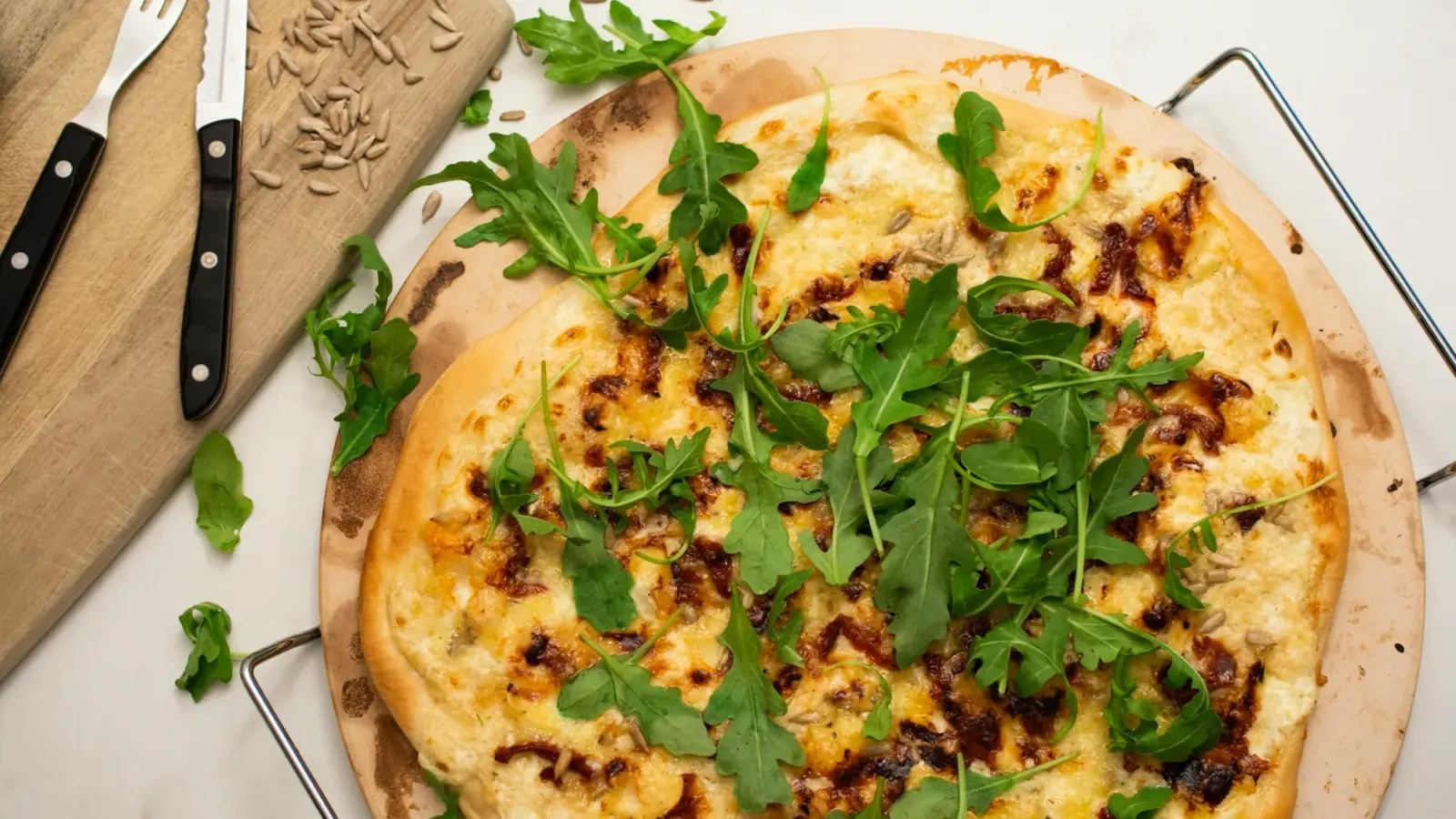
For most home ovens, a pizza steel works better. Steel passes heat into dough far faster than a ceramic stone, so the bottom crust browns in less time, and it won’t crack. A stone still makes very good pizza if you give it a full hour to heat, and it costs less and weighs about half as much. Cast iron behaves more like steel than stone, in a smaller, round format.
That ranking matches America’s Test Kitchen’s September 2026 review of pizza stones and steels, where the steels finished ahead of every stone even though every model made very good pizza. Here’s why, and when the cheaper, lighter stone is the smarter buy.
At a glance
- Best for most home ovens (450 to 550°F / 230 to 290°C): a ¼-inch (6 mm) steel, about 15 to 16 lb (7 kg) for a 16-by-14-inch (41 by 36 cm) slab.
- Preheat: 45 to 60 minutes for a ¼-inch steel; a full hour for a stone or a ⅜-inch (10 mm) steel.
- Browning speed: King Arthur Baking says switching from a stone to a steel can cut bake times by a third or more.
- Durability: stones crack from moisture, drops and sudden temperature changes; steels can rust but are close to indestructible.
- Pick a stone for a tight budget, lighter lifting, or ovens that run far hotter than 550°F.
How a stone and a steel move heat
Two properties decide how a baking surface behaves: heat capacity, or how much heat the slab can store, and thermal conductivity, or how fast it hands that heat to the dough. Think of a bucket and its tap.
On storage, the two are closer than most people assume. Pound for pound, ceramic holds nearly twice as much heat as steel: engineering tables list stone, clay and porcelain at roughly 0.8 to 1.1 kJ/kg·K and steel at 0.49. But steel is so dense that a ¼-inch slab weighs about 16 lb (7 kg), roughly double a typical ⅝-inch (16 mm) stone of the same size. Multiply weight by heat capacity and the two buckets land in the same ballpark.
The tap is where they part ways. Most pizza stones are not stone at all but cordierite, a ceramic, and ceramics are poor conductors.
Engineering ToolBox’s conductivity tables put plain carbon steel at roughly 40 to 60 W/m·K and fired ceramics such as porcelain and fireclay brick around 1.5, a gap of 30 times or more. Baking Steel, which sells steels, claims a more modest 18 times.
What that does to the crust
In ATK’s tests, the steels pushed heat into the dough faster, so pies rose higher and browned sooner, with slightly airier, moister, more tender crusts. The stones browned more gradually, giving the dough more time to dry out, and their crusts came out slightly drier and chewier.
King Arthur Baking’s Andrew Janjigian, in his tips for artisan pizza at home, says a steel can cut baking times by a third or more. King Arthur’s Neapolitan-style method at 500 to 550°F (260 to 290°C), broiler on, calls for about 6 minutes on a steel against 7 on a stone.
Why steel shines in a 450 to 550°F oven
A home oven’s air is too cool to brown a crust in the 6 to 8 minutes a thin pie needs, so the slab underneath does most of the work on the bottom. A fast conductor delivers more of its stored heat inside that short window, which is why steel matters most in ovens that top out at 450 to 550°F (230 to 290°C). Baking Steel’s own temperature guide runs from 450°F plus the broiler for Neapolitan-style pies to 500 to 550°F for New York-style.
Turn the heat up far enough and the reasoning flips. Ooni’s guidance for its outdoor ovens is 350 to 450°C (660 to 850°F), depending on style, and its Karu 12 bakes on a 15 mm cordierite board. At that heat the surface already holds more than a thin crust can take, so a stone that browns gradually gives the top time to finish before the bottom scorches.
Pizzeria deck ovens bake on stone too, but as King Arthur’s Martin Philip notes, their decks carry far more thermal mass than any home stone. Our New York vs. Neapolitan pizza comparison explains why the two styles want such different ovens.
Stone, steel and cast iron side by side
| Cordierite stone | ¼-inch steel | ⅜-inch steel | Cast-iron pizza pan | |
|---|---|---|---|---|
| Heat transfer | Slow and gradual | Fast | Fast, with more reserve | Fast; iron conducts about as well as steel |
| Preheat | 60 min (thin tiles about 30) | 45 to 60 min | 60 min | Heats with the oven; Lodge’s thin-crust recipe gives no set time |
| Thin-pie bake | About 7 min at 500 to 550°F, broiler on | About 6 min at 500 to 550°F, broiler on | Same as ¼ inch | 10 to 15 min in Lodge’s thin-crust recipe at 500°F |
| Best at | Tight budgets; outdoor pizza ovens at 660°F (350°C) and up | Home ovens at 450 to 550°F, with or without the broiler | Many pies in a row at 450 to 550°F | Round pies about 14 in (36 cm) across; oven or grill |
| Typical size and weight | 16 × 14 in, about ⅝ in thick: 8 to 9 lb (3.6 to 4.1 kg) | 16 × 14 in: 15 to 16 lb (7 kg) | 16 × 16 in (41 × 41 cm): 27 lb (12 kg) | 15 in (38 cm) round: just under 10 lb (4.5 kg) |
| Durability | Cracks from moisture, drops, sudden temperature changes | Nearly unbreakable; rusts if left wet | Nearly unbreakable; rusts if left wet | Tough, but uneven heat can warp or crack it |
| Cleaning | Scrape and brush; no soap, no soaking | Scrape; wash if needed, dry, oil | Scrape; wash if needed, dry, oil | Hand wash, dry, oil |
| Price tier | Budget (premium ceramics cost more) | Mid-range | Top | Budget |
Preheat time and recovery between pizzas
Preheat longer than the oven’s ready beep suggests. The beep reports air temperature, and a thick slab lags behind.
- Stones: at least an hour. In ATK’s preheating test, 60 minutes gave the best crust and 30 minutes a merely decent one.
- Steels: Janjigian’s minimum is 30 minutes. In Baking Steel’s thermocouple test in a 550°F (290°C) electric oven, published September 30, 2026, its ¼-inch steel passed 550°F at roughly the 30-minute mark. The ⅜-inch version needed about 48 minutes and was still at 531°F (277°C) when the oven beeped. The company’s advice: 45 to 60 minutes for ¼ inch, a full 60 for ⅜ inch.
Fast heat transfer cuts both ways. ATK measured the steels’ temperatures dropping faster than the stones’ once dough went on, and King Arthur Baking’s David Tamarkin advises giving either surface at least five minutes to recover between pizzas, or each pie comes out paler and less crisp than the last.
Thickness and weight: ¼ inch or ⅜ inch
Steel
A ¼-inch (6 mm) steel is the standard. Both of ATK’s co-winners were that thickness at 16 lb (7 kg), and Baking Steel lists its ¼-inch Original at 15 lb. It is also, in ATK’s words, “a beast to lift,” because a flat slab gives you nothing to grip.
A ⅜-inch (10 mm) steel such as the 16-inch-square Baking Steel Pro weighs 27 lb (12 kg). It held heat better between batches in ATK’s tests, but its pizzas were no better than those from thinner, lighter steels, and testers found it a pain to move in and out of the oven.
Stone
The thinner 16-by-14-inch cordierite stones in ATK’s lineup ran 0.6 to 0.67 inch (15 to 17 mm) thick and 8 to 9 lb. A 1.1-inch (28 mm) stone of the same size weighed 13 lb (5.9 kg), and ATK saw no evidence that it performed better. A 1-inch mullite stone recovered faster between pies but made no clearly different pizza.
Tile sets go the other way. Each tile weighed under 1.5 lb (0.7 kg), nothing fell through the gaps, one set preheated in about 30 minutes, and ATK’s best-buy pick was a set of tiles.
Tip: Measure your oven rack from front to back before you order. Baking Steel says its 16-inch-square Pro needs a rack at least 18 inches (46 cm) deep and points smaller ovens to the 16-by-14-inch size. The two 14-inch (36 cm) pies from our New York-style pizza dough fit on either.
Where cast iron fits
Cast iron conducts heat about as well as carbon steel (Engineering ToolBox lists it at 52 W/m·K), so a preheated pan behaves like a small, round steel. The difference is format. Lodge’s 15-inch (38 cm) pizza pan weighs just under 10 lb (4.5 kg) and has two handles, so it is far easier to move than a slab, and Lodge pitches it for the grill too. For thin crust, Lodge heats the pan in a 500°F (260°C) oven and slides the topped pizza onto it.
The catch is that the pie can be no bigger than the pan. Cast iron is far tougher than ceramic, though Lodge notes that very uneven heating can warp or even crack it.
Durability, cleaning and care
Why stones crack, and how to keep yours whole
Cordierite handles high heat; it hates water and sudden change. ATK explains that the porous ceramic absorbs water, which can stay trapped inside even when the surface looks dry, then expand as the stone heats. Drops crack stones too. Baking Steel’s guide to cracked stones adds the thermal-shock culprits: a cold stone going into a hot oven, frozen pizza on a hot stone, and a hot stone set down on a cold surface.
- Put the stone in a cold oven and let the two heat together.
- Leave it in the oven between uses if you can, but off the oven floor, which ATK warns can damage some ovens.
- Thaw frozen pizza before it touches a hot stone.
- Let the stone cool completely before moving it, and take it out before a self-cleaning cycle.
Note: A cracked stone is not necessarily finished. If it breaks into a few large pieces, ATK says to push the pieces together on the rack and keep using it, since a stone does not have to be intact to absorb and radiate heat.
Cleaning a stone
- Once it is completely cool, scrape off stuck-on bits with a wooden or plastic scraper (King Arthur’s suggestion) and brush away the crumbs.
- Skip the soap. ATK warns it can get trapped in the stone’s pores and come back out as a soapy-tasting pizza. Never soak a stone.
- For stubborn spots, King Arthur Baking suggests a paste of baking soda and a little water, left for a few hours, then brushed off dry.
- Dark stains are normal, and stuck-on residue burns down to ash during the next preheat.
- If the stone gets wet, let it air-dry thoroughly before it goes back into a hot oven.
Cleaning and seasoning a steel
A steel will not crack in normal use; ATK expects one to last a lifetime with a little care. Its enemy is rust. Scrape it while warm but not hot, wipe it dry, and use hot water and a stiff brush for anything stubborn. Advice on soap differs: ATK says skip it, while King Arthur Baking’s guide to cleaning stones and steels and Baking Steel allow mild soap, as long as you dry the steel completely and re-oil it.
Baking Steel ships its steels pre-seasoned. When the surface turns dull and gray or dough starts to stick, re-season it:
- Start with a clean, completely dry steel.
- Rub a very thin film of oil over both sides. Baking Steel prefers flaxseed oil; grapeseed, canola or vegetable oil also work.
- Wipe off as much as you can with a clean paper towel. Leftover oil turns sticky.
- Bake for an hour at 375 to 400°F (190 to 200°C), then turn off the oven and let the steel cool inside.
Baking Steel puts re-seasoning at once or twice a year for most owners. If rust appears, scrub it off with steel wool or fine sandpaper, wash and dry the steel, then season it again.
Using the broiler with a stone or steel
The broiler lets a 550°F oven act like a hotter one: the slab cooks the bottom while the element browns the top. Janjigian notes it can also top up the baking surface before the pie goes in, and a steel soaks that heat up fast. In Baking Steel’s thermocouple test, both its steels passed 700°F (370°C) within about three minutes under the broiler; the company suggests 90 seconds to 2 minutes of broiling just before launch, then switching back to bake.
The other approach, which King Arthur Baking’s Martin Philip demonstrates on video with either surface, is bake low, finish high: stone or steel in the lower third of the oven, then the pie moves to an empty upper rack under the broiler. Rack heights, timings and the workaround for electric ovens that cut out their broilers are in our guide to baking crispy pizza in a home oven.
Which one to buy
Price, in broad strokes
Prices move, so here are tiers rather than numbers, based on ATK’s September 2026 lineup and makers’ listings as of October 2026. Plain cordierite stones and ceramic tile sets are the budget option, along with a cast-iron pizza pan. A ¼-inch steel typically costs two to four times as much as a basic stone, putting it in the middle tier alongside premium mullite stones. At the top are ⅜-inch steels and fiber-reinforced refractory stones.
The verdict by use case
- Thin New York-style pies in a standard oven: a ¼-inch steel, the right tool for a classic New York cheese pizza at 500 to 550°F.
- Several pies in a row for a crowd: a ⅜-inch steel if you can handle 27 lb, or two surfaces used in turn.
- Tight budget, or 16 lb is too much to lift: a cordierite stone preheated a full hour, or a tile set. Expect a slightly longer bake and a drier, chewier crust.
- An outdoor pizza oven: stone. At 660°F (350°C) and up, steel’s speed works against you.
- Round pies, handles and oven-to-table serving: a cast-iron pizza pan.
- Leftover slices: a preheated steel re-crisps a cold bottom crust well; our guide to reheating pizza so the crust stays crisp has the method.
Sources
- The Best Pizza Stones and Steels of 2026 (published September 1, 2026), America's Test Kitchen
- Preheating a Pizza Stone, America's Test Kitchen
- What to Do If Your Pizza Stone Cracks, America's Test Kitchen (Lisa McManus)
- Top tips for artisan pizza, King Arthur Baking (Andrew Janjigian)
- Pizza steel vs. stone: What's best for making pizza?, King Arthur Baking (David Tamarkin)
- How to make Neapolitan-style pizza at home, King Arthur Baking (Rossi Anastopoulo)
- Pizza stone vs. pizza steel vs. sheet tray (video), King Arthur Baking (Martin Philip)
- How to clean a pizza stone or baking steel, King Arthur Baking (Afton Cyrus)
- How Long to Preheat a Pizza Steel? I Put a Thermocouple on It (published September 30, 2026; updated October 21, 2026), Baking Steel (manufacturer)
- The Science Behind the Ultra-Conductive Baking Steel Original, Baking Steel (manufacturer)
- What Temperature to Bake Pizza in a Home Oven, Baking Steel (manufacturer)
- Why the Baking Steel Is Heavy (And Why We'll Never Change That), Baking Steel (manufacturer)
- Baking Steel Pro (product specifications), Baking Steel (manufacturer)
- How To Clean and Season your Pizza Steel, Baking Steel (manufacturer)
- Why Did My Pizza Stone Crack? 6 Causes and How To Prevent It, Baking Steel (manufacturer)
- Metals, Metallic Elements and Alloys - Thermal Conductivities, Engineering ToolBox
- Thermal Conductivity of Common Materials, Engineering ToolBox
- Specific Heat of Solids, Engineering ToolBox
- 15 Inch Seasoned Cast Iron Pizza Pan (product specifications), Lodge Cast Iron
- Thin Crust Pizza, Lodge Cast Iron
- Why You Need a Cast Iron Pizza Pan, Lodge Cast Iron
- How to Use Cast Iron Over Any Heat Source, Lodge Cast Iron
- Pizza Stones (cooking temperature guidance), Ooni
- Ooni Karu 12 Multi-Fuel Pizza Oven (15 mm cordierite stone baking board), Ooni