New York vs. Neapolitan Pizza: What’s the Difference?
Strong flour and a gas deck oven on one side, 00 flour and a 90-second bake on the other: the two choices behind every other difference.
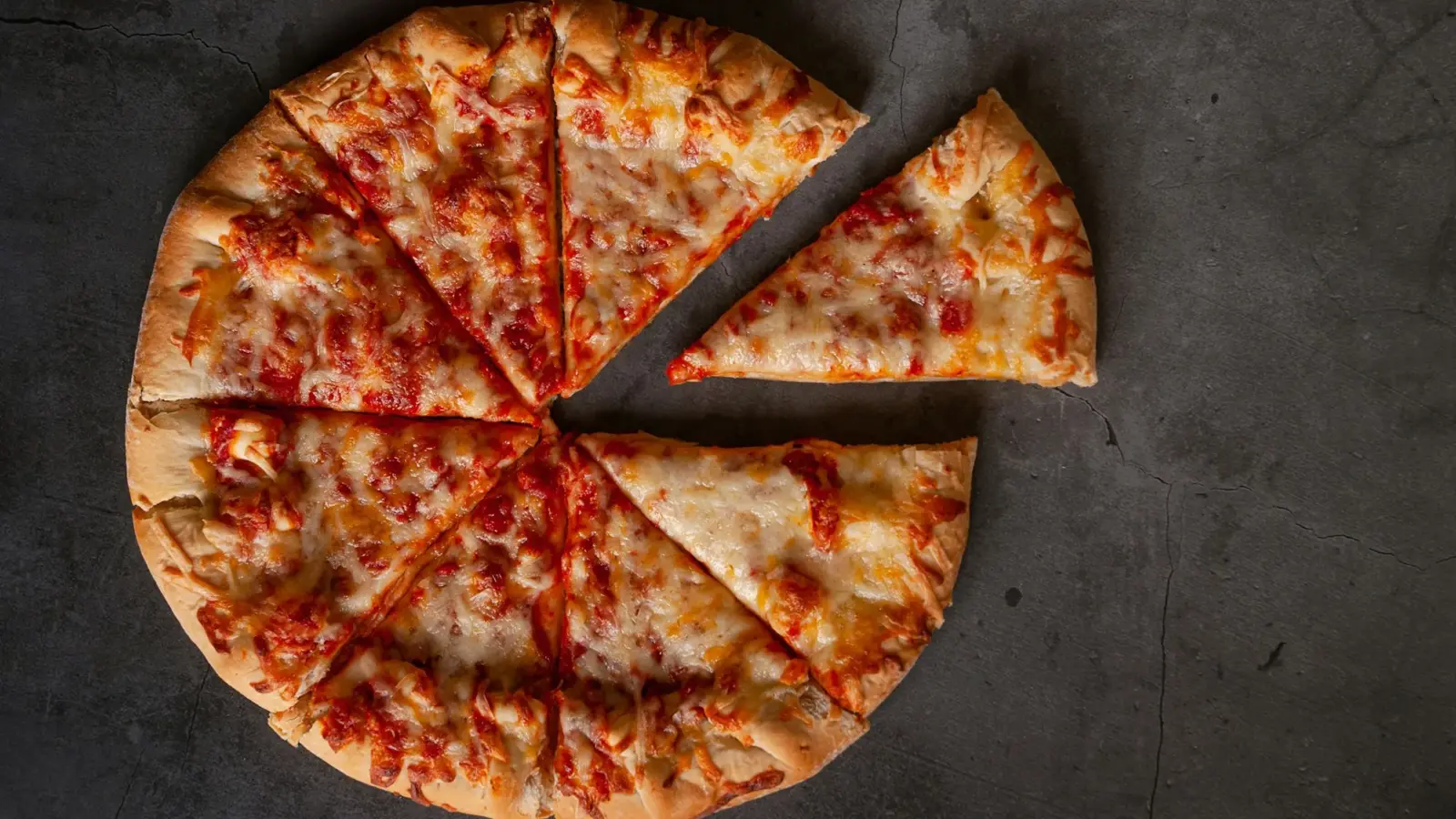
New York and Neapolitan pizza share an ancestor, but they are built differently from the flour up. A New York pie is big, thin and foldable: strong bread or high-gluten flour, usually a little oil and sugar in the dough, shredded low-moisture mozzarella and several minutes in a gas deck oven. A Neapolitan pizza is small, soft and puffy-rimmed: Italian 00 flour, water, salt and yeast, nothing else, baked for 60 to 90 seconds in an oven a few hundred degrees hotter.
Almost every other difference, from the chew and the char to the fold and the knife and fork, traces back to those two choices: the flour and the heat.
At a glance
- Flour: New York uses high-gluten or bread flour; Neapolitan uses finely milled Italian type 00 or 0.
- Dough: New York dough often includes oil and sugar. Neapolitan rules allow only flour, water, salt and yeast.
- Heat: About 500–650°F (260–340°C) for roughly 5–10 minutes, versus an oven floor of about 715–805°F (380–430°C) for 60–90 seconds.
- Size: A large pie, commonly about 18 inches (46 cm), sold whole or by the slice, versus a 9- to 14-inch (22–35 cm) pizza for one.
- Eating: A New York slice gets folded lengthwise; a Neapolitan pizza’s soft center usually calls for a knife and fork.
New York vs. Neapolitan pizza, side by side
The Neapolitan column follows the International Regulations of the Associazione Verace Pizza Napoletana (AVPN), the Naples association whose first rulebook dates to June 1984; this guide uses the 2024 English edition. New York-style pizza has no governing body, so that column describes common slice-shop practice, and individual pizzerias vary.
| New York-style | Neapolitan (AVPN rules) | |
|---|---|---|
| Flour | High-gluten (about 14% protein) or bread flour | Italian type 00 or 0, medium strength (11–13.5% protein); 5–20% type 1 allowed |
| Dough ingredients | Flour, water, salt, yeast, usually a little oil and sugar | Flour, water, salt, yeast only; no fat, no sugar |
| Hydration | Varies by shop; King Arthur Baking’s home recipe works out to about 57% | About 56–63% (1 liter of water to 1.6–1.8 kg of flour) |
| Fermentation | Often cold-fermented in the refrigerator, overnight to 3 days | 12–24 hours in total, at room temperature or 64–68°F (18–20°C) |
| Oven | Gas-fired deck oven; a few old-line pizzerias still burn coal | Wood-fired by tradition; AVPN now allows certified gas or electric ovens |
| Temperature | About 500–650°F (260–340°C) | Floor about 715–805°F (380–430°C); dome about 905°F (485°C) |
| Bake time | Roughly 5–10 minutes | 60–90 seconds |
| Size | Large, commonly about 18 inches (46 cm), cut into eight slices | 22–35 cm (about 9–14 inches) from a 200–280 g (7–10 oz) dough ball |
| Cheese | Shredded low-moisture mozzarella | Fior di latte or buffalo mozzarella from Campania DOP, cut into strips or slices |
| Sauce | A thin layer of seasoned tomato sauce, cooked or raw | Peeled tomatoes, preferably crushed by hand, salted and not precooked |
| Crust | Thin, crisp underside, chewy crumb, firm enough to fold | Soft and elastic; 1–2 cm rim, center about 0.25–0.3 cm thick |
| How it’s eaten | By hand, folded lengthwise | Knife and fork, or folded by hand |
| How it’s sold | By the slice or as a whole pie | Whole, usually one per person |
Flour and dough: strength versus finesse
New York dough is built for structure. High-gluten flour runs about 14% protein, and King Arthur Baking’s overview of pizza styles says the chewy-crisp crust of a New York slice demands it. Bread flour (King Arthur’s is 12.7% protein) is the usual home substitute and gives a slightly softer bite.
Neapolitan dough uses Italian type 00 or type 0 flour. The “00” describes how finely the flour is milled and refined on the Italian grading scale, not how strong it is. AVPN’s specification for 00 calls for a medium-strength flour of 11.5–13.5% protein, which overlaps with plenty of American bread flours. The bigger difference is the oven each flour is meant for.
What the Neapolitan rules allow in the dough
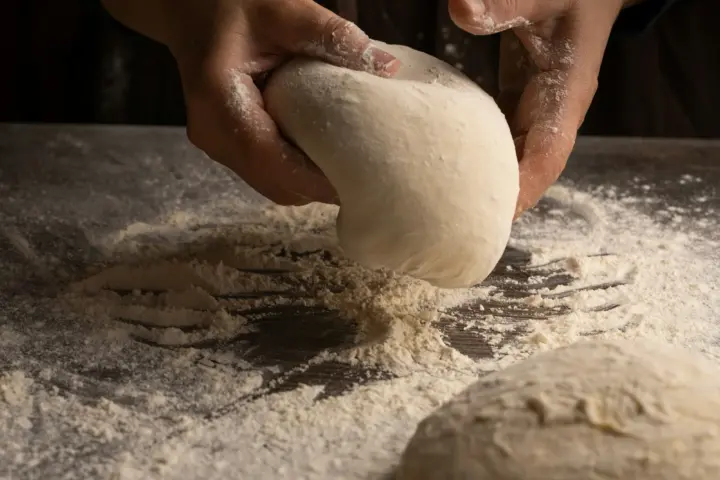
The AVPN rulebook is blunt: “Never add any fat or sugar to the dough.” The formula is written per liter of water: 40–60 g of salt, 0.1–3 g of fresh yeast depending on temperature, humidity and timing, and 1.6–1.8 kg of flour.
In baker’s percentages, that is roughly 56–63% hydration and 2.2–3.75% salt. Dry yeast is permitted at one-third the weight of fresh, and so is sourdough starter. The disc must be stretched by hand; rolling pins and mechanical presses are out.
Why New York dough adds oil and sugar
A New York pie spends several minutes in a much cooler oven, and both additions help it through the longer bake. Sugar speeds browning, so the crust takes on color before it dries out. Oil keeps the crumb tender. In a Neapolitan oven, sugar would only make the crust scorch sooner.
The amounts are small. King Arthur Baking’s home New York-style recipe works out to about 57% hydration and roughly 3% each of sugar and oil. Our step-by-step New York dough recipe lays out its full formula in baker’s percentages.
The real divider: oven heat and bake time
A Neapolitan pizza bakes directly on the oven floor, which AVPN puts at about 715–805°F (380–430°C), with the dome near 905°F (485°C). The bake should not exceed 60 to 90 seconds. That is enough to inflate and blister the rim and melt the cheese, but not enough to dry out the center, which is why it stays soft and a little wet.
Not every rulebook agrees on those numbers. The European Union’s 2010 specification for Pizza Napoletana reverses them, putting the floor at about 905°F (485°C) and the dome at about 805°F (430°C). Either way, the oven runs a few hundred degrees hotter than a slice-shop deck.
Wood is the tradition. When UNESCO added the art of the Neapolitan pizzaiuolo to its intangible cultural heritage list in 2017, it described baking in a wood-fired oven as part of the craft, and the EU specification still requires one. The 2024 AVPN rules are looser. They allow gas or electric ovens the association has certified, and a pizzeria that uses one gets a modified certification that flags the difference. So whether a true Neapolitan pizza must be wood-fired depends on which rulebook you ask, and plenty of guides written under earlier AVPN rules still say wood only.
Most New York slice shops bake in gas-fired deck ovens. Food Republic’s guide to New York pizza styles puts the usual temperature at about 500–550°F (260–290°C), and the oven maker Ooni gives a pizzeria range of 500–650°F (260–340°C). At that heat a pie needs roughly 5 to 10 minutes, long enough to dry and crisp the underside so a slice holds its shape when you fold it.
Coal is the exception. A handful of old-line New York pizzerias still bake in coal ovens, which Food Republic says can reach 800–1,000°F (about 425–540°C). Those places sell whole pies rather than slices, and the hotter bake chars the crust more than a gas deck does.
Note: “Neapolitan-style” on an American menu is a description, not a certification. Only pizzerias approved by AVPN can use its Verace Pizza Napoletana trademark, and the association carries out periodic and random checks on them.
Cheese and sauce
New York pizza uses shredded low-moisture mozzarella, whole-milk if possible. Under the FDA’s standard of identity, low-moisture mozzarella holds more than 45% but no more than 52% water by weight, while regular mozzarella runs above 52% and up to 60%. The drier cheese melts into a continuous, stretchy, lightly browned layer over a several-minute bake without flooding the crust.
Neapolitan pizza uses fresh cheese: fior di latte (cow’s-milk mozzarella) or buffalo mozzarella from Campania DOP. AVPN’s margherita calls for 80–100 g per pizza, cut into strips or slices. In 90 seconds it softens into milky pools rather than a single sheet, which adds to the wet center. Our guide to mozzarella and other pizza cheeses covers both in more depth.
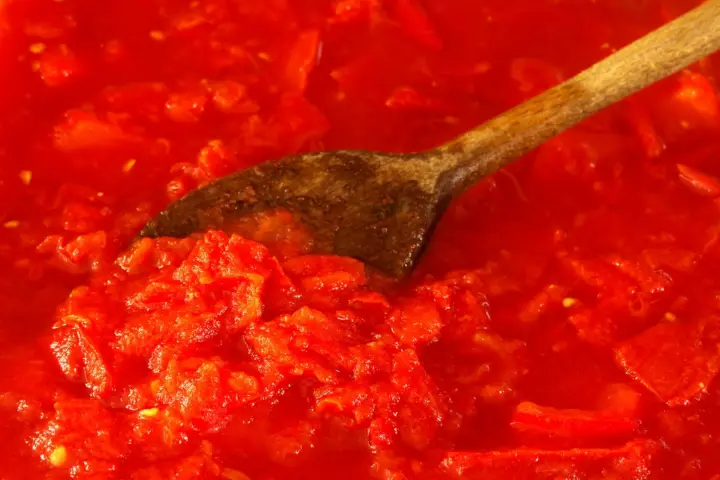
Sauce follows the same logic. AVPN calls for peeled San Marzano DOP tomatoes or other long, Roma-type tomatoes, preferably Italian and preferably crushed by hand. They are salted at about 10–12 g per kilogram (7–10 g for San Marzanos, which the rules call already tastier) and go on uncooked, 60–80 g on a margherita. The oven does all the cooking.
New York shops spread a thin layer of seasoned tomato sauce. The classic is slightly sweet, and shops split on whether to cook it. King Arthur Baking’s home version is a raw sauce with a teaspoon of sugar per 28-ounce can, and the finished pie gets dried oregano and red pepper flakes.
Size, shape and crust texture
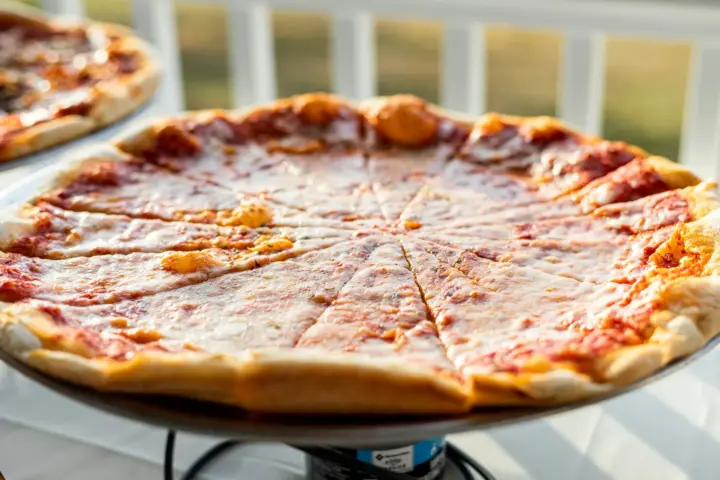
A New York pie is large, commonly about 18 inches (46 cm) across, and is usually cut into eight wide slices. The center is thin, the rim modest, the underside crisp and lightly spotted, the crumb chewy. A good slice bends without cracking: firm enough to fold, soft enough not to shatter.
A Neapolitan pizza is personal-sized. AVPN ties dough weight to diameter: a 200 g (7 oz) ball for a 22–24 cm (about 9-inch) pizza, up to 280 g (10 oz) for 28–35 cm (11–14 inches). After baking, the center should be only about 0.25–0.3 cm (roughly ⅛ inch) thick, and the raised rim, the cornicione, 1–2 cm (about 0.4–0.8 inch) tall.
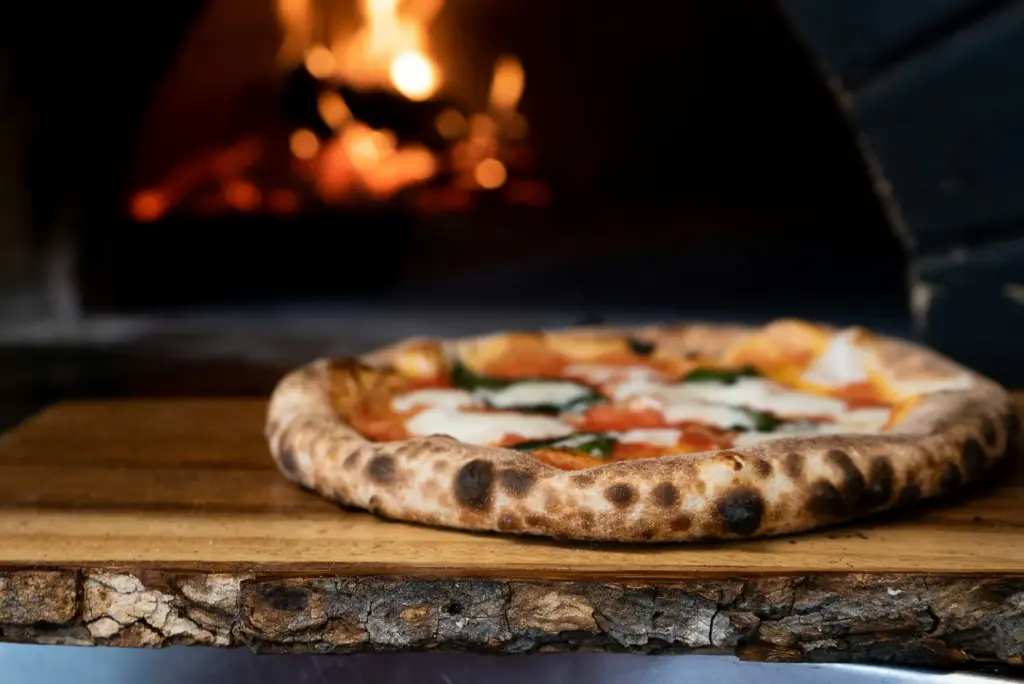
By AVPN’s description, the rim should be golden brown and evenly risen, without big bubbles or burned spots, and the whole pizza soft, elastic and easy to fold.
How each one is served and eaten
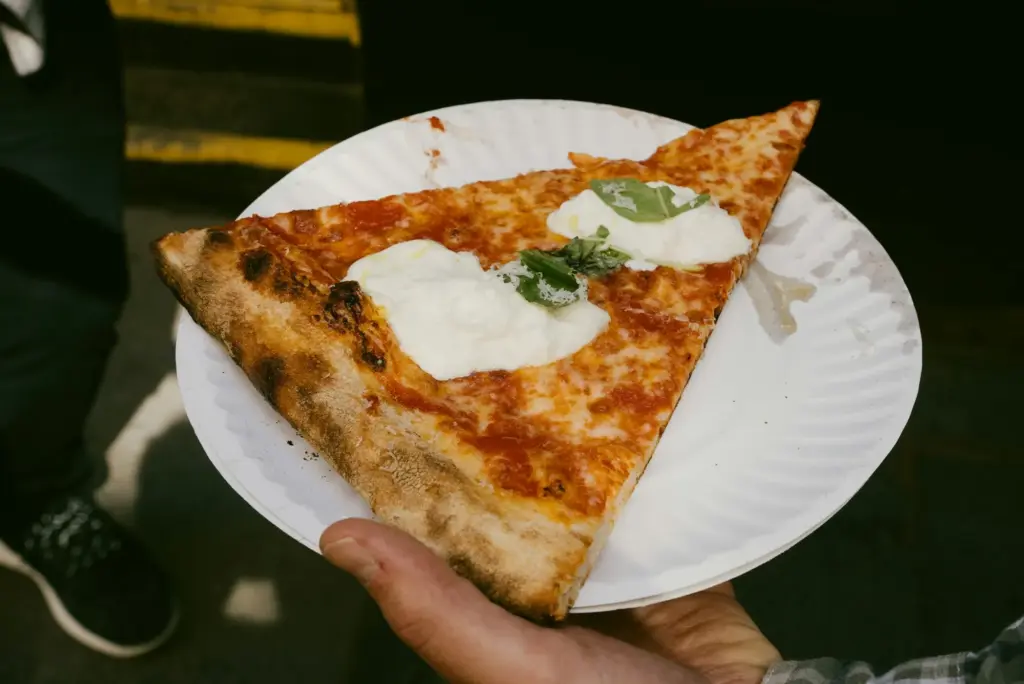
New York pizza is sold by the slice as readily as by the pie. Food Republic dates the spread of dedicated slice shops to the years after World War II, and Scott Wiener of Scott’s Pizza Tours credits gas ovens, introduced in the early 1940s, with making pizza by the slice a viable business. The fold, creasing a slice lengthwise so the tip doesn’t droop, is how New Yorkers eat standing up or on the move.
Neapolitan pizza comes whole, sized for one, and AVPN says it should be eaten as soon as it leaves the oven, ideally within 10 minutes. The soft, saucy center is why King Arthur Baking’s style overview says it takes a knife and fork.
Folding isn’t foreign to Naples, though. Wiener points to pizza al portafoglio, a folded slice wrapped in paper to eat on the go, and to a whole pizza folded a libretto, like a book. The EU specification even describes a proper Pizza Napoletana as easily foldable into four.
How one style became two
New York-style pizza grew out of the pizza Italian immigrants were baking in Lower Manhattan by the 1890s. For decades, Lombardi’s on Spring Street, said to have been licensed in 1905, was cited as the starting point. Research by Peter Regas, reported by Smithsonian Magazine in 2019, could not find that license, showed pizza being made at the Spring Street shop by 1901 and found that Gennaro Lombardi did not arrive in New York until 1904.
Those early pizzerias sold whole pies from coal ovens. The slice, and the style most people now mean by “New York pizza,” came with the gas deck oven in the 1940s. The full story is in our history of how New York-style pizza became an American icon.
Naples went the other way and wrote its pizza down. AVPN drew up its first rules in 1984, the European Union registered Pizza Napoletana as a Traditional Speciality Guaranteed in 2010, and UNESCO recognized the pizzaiuolo’s craft in 2017. New York never wrote a rulebook, which is why its pizza is defined by habit rather than by rules.
Which style works in a home oven
New York-style is the realistic target. Most home ovens top out at 500–550°F (260–290°C), the same territory as a slice-shop deck, especially with a preheated pizza steel or stone. That is why a classic New York cheese pizza translates so well to a home kitchen, and our guide to baking crispy pizza in a home oven covers how to get the most from the heat you have.
A true Neapolitan pizza is a different matter. Without a 700-plus-degree oven floor, a lean dough of flour, water, salt and yeast browns slowly, and by the time it colors, the crust has dried out. Home recipes labeled “Neapolitan-style” adjust for that. King Arthur Baking’s adds a little sugar to the dough and finishes the pie under the broiler; America’s Test Kitchen’s also uses sugar and the broiler, and tells you to drop the sugar in a 650–700°F (345–370°C) pizza oven to prevent overbrowning. Both are fair compromises, as long as you know they are not the AVPN version.
Our margherita recipe and technique covers both routes: an outdoor pizza oven hot enough for a 90-second bake, and a home-oven workaround.
Sources
- International Regulations for obtaining use of the collective trade mark Verace Pizza Napoletana (2024 English edition), Associazione Verace Pizza Napoletana (AVPN)
- Art of Neapolitan 'Pizzaiuolo' (inscribed 2017, 12.COM), UNESCO Intangible Cultural Heritage
- Commission Regulation (EU) No 97/2010 of 4 February 2010 entering Pizza Napoletana (TSG) in the register of traditional specialities guaranteed, Annexes, legislation.gov.uk (The National Archives)
- The Father of American Pizza Is Not Who We Thought He Was (Jason Daley, Feb. 8, 2019), Smithsonian Magazine
- Exploring artisan pizza (Andrew Janjigian, Apr. 7, 2021), King Arthur Baking
- The Difference Between NYC's 4 Most Common Styles Of Pizza (Andrea Carlo, Aug. 1, 2026), Food Republic
- When did we start folding pizza? (Scott Wiener, Nov. 29, 2015), Scott's Pizza Tours
- New York-Style Pizza (recipe), King Arthur Baking
- High Gluten Flour (product page, 14% protein), King Arthur Baking
- Which flour is best for your pizza? (Rossi Anastopoulo, Mar. 13, 2024), King Arthur Baking
- How to make Neapolitan-style pizza at home (Rossi Anastopoulo, Oct. 8, 2020), King Arthur Baking
- Neapolitan-Style Pizza (recipe), America's Test Kitchen
- New York Pizza: the Iconic Slice, with Wylie Dufresne (podcast transcript), King Arthur Baking
- New York-Style Pizza Recipe, Ooni
- Your Guide To The 4 Most Common Types Of NYC-Style Pizza (Jessica Riggio, Apr. 14, 2026), The Takeout
- 21 CFR 133.156 Low-moisture mozzarella and scamorza cheese, Legal Information Institute, Cornell Law School
- 21 CFR 133.155 Mozzarella cheese and scamorza cheese, Legal Information Institute, Cornell Law School
- New York-style pizza, Wikipedia