Homemade Marinara Sauce for Pasta and Pizza
Whole peeled tomatoes, garlic, olive oil and basil, simmered 20 minutes in a wide pan: the everyday red sauce for pasta, dipping and pizza.
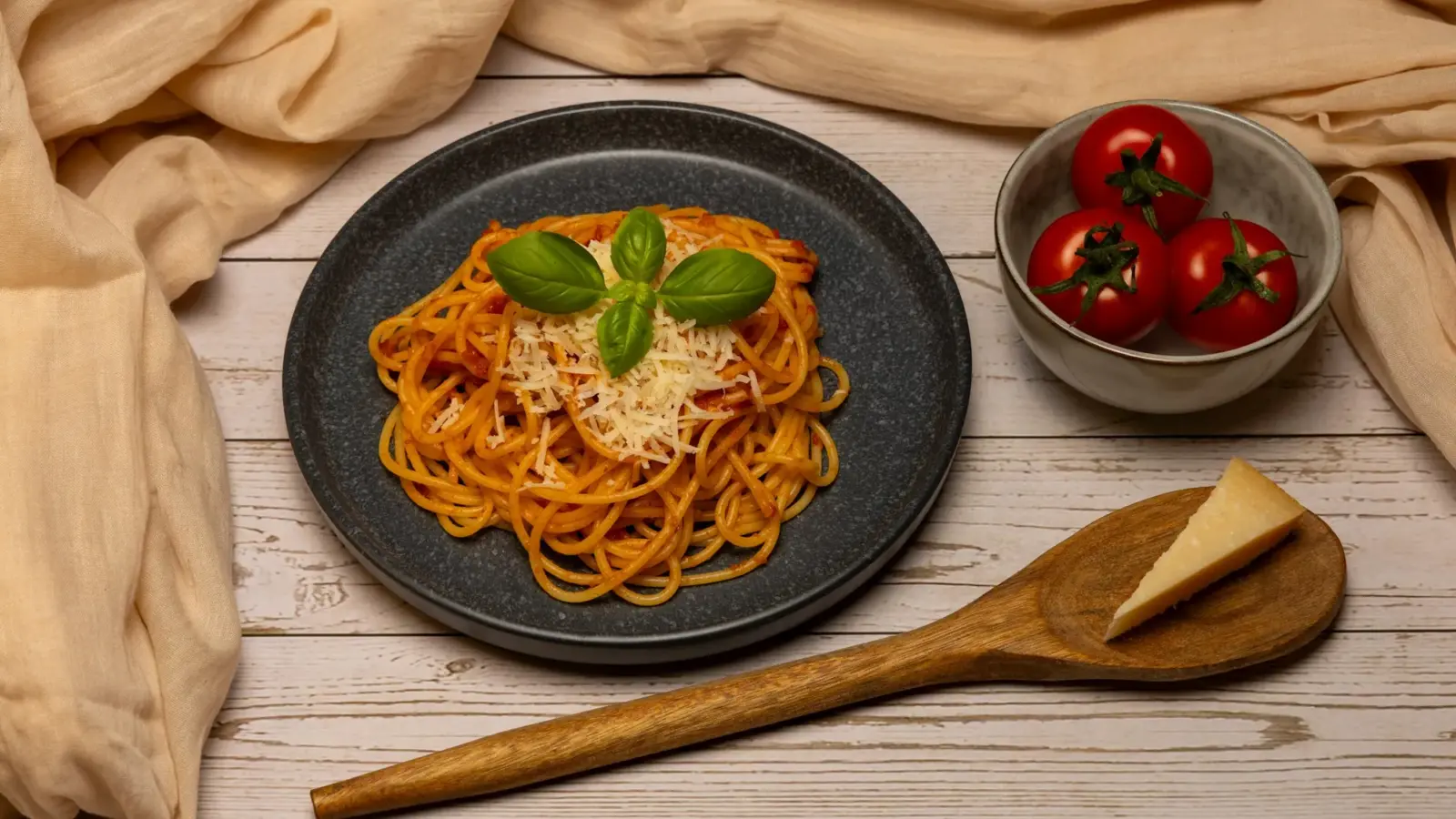
A good Italian-American marinara is a 30-minute job: whole peeled tomatoes crushed by hand, sliced garlic warmed in olive oil, about 20 minutes of steady simmering in a wide pan and fresh basil at the end. Two 28-ounce cans make about 4 cups, enough for a pound of pasta with some left for the table.
The same pan covers weeknight spaghetti, a bowl of dip for garlic knots and, with a few more minutes on the heat, a cooked sauce for pizza.
Marinara vs. pizza sauce vs. Sunday gravy
All three usually start from canned tomatoes. What separates them is time on the heat and what else goes into the pot.
| Marinara (this recipe) | No-cook pizza sauce | Sunday gravy | |
|---|---|---|---|
| Time on the stove | About 20 minutes | None; it cooks on the pie | Hours |
| Meat | None | None | Meatballs, sausage, braciola; sometimes pork neck bones or veal |
| Flavor | Bright, garlicky, lightly concentrated | Freshest, closest to the can | Deep and meaty |
| Texture | Spoonable; chunky or smooth | Thick enough to spread without running | Thick and rich |
| Best for | Pasta, dipping, chicken Parmesan, baked ziti | Pizza | Sunday dinner, meats served alongside the pasta |
Our no-cook pizza sauce goes on raw because a thin layer cooks down while the crust browns. Marinara is eaten straight from the pan, so it needs its own short simmer.
Sunday gravy, also called Sunday sauce, sits at the other extreme: hours on the stove, with the meats cooking in the pot. A 2014 Saturday Evening Post story on Sunday gravy credits that long simmer with a meatiness “no quickie marinara could ever hope to replicate.” True, and beside the point: marinara is for nights with 30 minutes to spare, not an afternoon.
Why 20 minutes in a wide pan is enough
Canned tomatoes have already been heat-processed, so marinara has two jobs: mellow the canned flavor and drive off enough water to turn thin juice into sauce. Evaporation happens at the surface, and a 12-inch (30 cm) sauté pan has more than twice the surface area of an 8-inch (20 cm) saucepan, so the sauce thickens much faster and keeps more of its bright flavor. A wide Dutch oven works too; a tall stockpot doesn’t.
Hold a steady simmer, with bubbles breaking across the whole surface: too gentle and the sauce is still watery at 20 minutes, too hard and it catches on the bottom.
Garlic goes in gently
A minute or two in warm oil is all garlic needs. Pale gold at the edges is fine; once it turns brown, a bitter edge runs through the whole pan. Garlic has less water and more sugar than onion, America’s Test Kitchen explains in a piece on when to add garlic, so it browns and scorches fast, and small minced bits burn most easily. Thin slices over medium-low heat give you more margin. If you use onion, it goes in first, and the garlic follows once the onion is soft.
How to tell marinara is done
- It has reduced by about a third and looks glossy, not watery.
- A spoon dragged across the bottom of the pan leaves a trail that fills in slowly.
- A spoonful on a plate holds together without leaking a ring of thin liquid, and beads of orange-tinted oil gather at the edges of the pan.
Ingredient notes and substitutions
Whole peeled tomatoes, juice and all
Whole tomatoes let you choose the texture, and marinara keeps all their juice. Crushed tomatoes work in a pinch, but brands run from thin to pasty.
Check the label for calcium chloride, a firming agent common in American brands. In its 2023 tasting of whole canned tomatoes, America’s Test Kitchen found treated tomatoes break down less during cooking; some stayed in firm, distinct pieces in a simple sauce. With those, crush harder at the start or work a potato masher through the pan halfway in. Our pizza sauce recipe covers brand choice and what “San Marzano DOP” on a label actually guarantees.
Tip: Outside the US, four 400 g tins of whole peeled tomatoes (1.6 kg) replace the two 28-ounce (794 g) cans.
Garlic, onion, basil and salt
Six cloves sounds like a lot until it’s spread through 4 cups of sauce. The onion is optional: half a small one, finely chopped, adds sweetness and body for about 7 extra minutes. Red pepper flakes go into the oil with the garlic so their heat spreads through the fat.
A basil sprig simmered in the sauce gives a background note; torn leaves stirred in at the end give the fresh perfume that long cooking dulls. Lidia Bastianich’s marinara adds its basil about 5 minutes before the end. Without fresh basil, a pinch of dried oregano with the garlic gives a pizzeria-style sauce instead.
Go easy on salt early. Canned tomatoes range from unsalted to well salted, and salt concentrates as the sauce reduces, so half goes in with the tomatoes and the rest only after you taste at the end. Sugar is only for tomatoes that taste sharp.
Quick Italian-American Marinara Sauce
A 30-minute marinara of hand-crushed whole peeled tomatoes, gently cooked garlic, olive oil and fresh basil, simmered in a wide pan until it clings to pasta.
- Prep
- 5 min
- Cook
- 25 min
- Total
- 30 min
- Yield
- About 4 cups (950 ml), enough for 1 pound (454 g) of pasta with extra for the table
- Serves
- 6
- Oven
- Not needed; stovetop only
Ingredients
Sauce
Equipment
- 12-inch (30 cm) straight-sided sauté pan or a wide 5- to 6-quart (4.7 to 5.7 liter) Dutch oven, stainless steel or enameled
- Large mixing bowl
- Wooden spoon
- Potato masher or immersion blender (optional)
- Splatter screen (optional)
Instructions
- Crush the tomatoes Pour the tomatoes and juice into a large bowl. Squeeze them through your fingers, hands below the surface so they don't squirt, until the biggest pieces are grape-size. Pull out any hard stem cores.
- Heat the oil (and soften the onion) Warm 3 tablespoons (45 ml) olive oil in the pan over medium heat for about 1 minute. If using onion, add it with a pinch of the salt and cook, stirring, 6 to 8 minutes, until soft and translucent but not browned.
- Cook the garlic Turn the heat to medium-low, add the garlic and red pepper flakes and cook, stirring, 1 to 2 minutes, until the garlic smells sweet and sizzles gently. Pale gold at the edges is the limit; don't let it brown.
- Add the tomatoes Pour in the tomatoes and all their juice (stand back; it spits), half the salt and the basil sprig. Raise the heat to medium-high and bring to a simmer, about 3 minutes.
- Simmer uncovered Adjust the heat so bubbles break steadily across the whole surface. Simmer uncovered for 18 to 20 minutes, stirring and scraping the bottom every 3 to 4 minutes. For a medium texture, press the tomatoes with a potato masher about halfway through.
- Check the thickness The sauce is ready when it has reduced by about a third, looks glossy and a spoon dragged across the bottom leaves a trail that fills in slowly. If a spoonful on a plate leaks a ring of thin liquid, simmer 3 to 5 minutes more.
- Set the texture Take the pan off the heat and discard the basil sprig. Leave the sauce as it is, or pulse an immersion blender a few times for a smooth sauce.
- Finish and season Stir in the torn basil leaves and the remaining 1 tablespoon (15 ml) olive oil. Taste, add the rest of the salt as needed, and add sugar a pinch at a time only if the tomatoes taste sharp.
- Serve or store Use right away. Refrigerate leftovers within 2 hours and use within 3 to 4 days, or freeze at 0°F (−18°C) for up to 3 to 4 months.
Notes
- Yield depends on pan width and simmer strength; a narrower pot gives a looser, larger batch. Judge by the spoon trail, not the clock.
- Our baked ziti needs about 6 cups (1.4 liters) of sauce: cook a batch and a half, splitting it between two wide pans so it reduces on time.
Chunky, smooth or in between
- Rustic: hand-crush the tomatoes to grape-size pieces and leave them. Good with rigatoni and ziti, whose holes and ridges trap the chunks.
- Medium: press the softened pieces with a potato masher halfway through the simmer. The all-purpose texture for spaghetti.
- Smooth: after simmering, remove the basil sprig and give the sauce a few short pulses with an immersion blender, or pass it through a food mill. Best for dipping and pizza.
Stir in the finishing olive oil after blending, not before. When America’s Test Kitchen made aïoli in a food processor, tasters found the extra-virgin oil markedly bitter; the blades break oil into tiny droplets that free its bitter polyphenols.
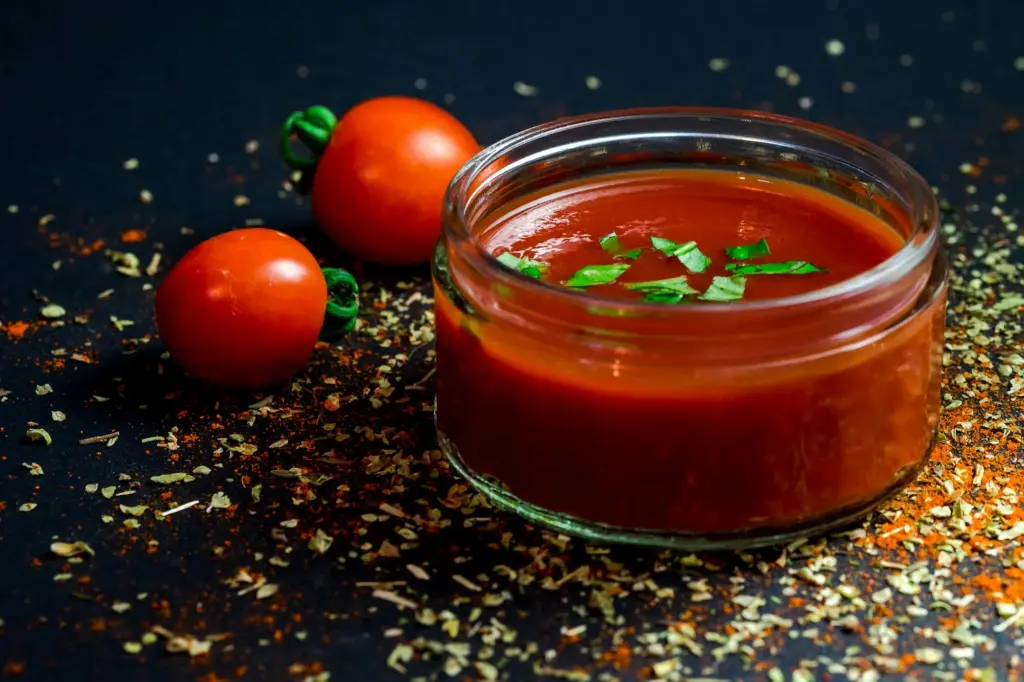
Using marinara for pasta, dipping and pizza
With pasta
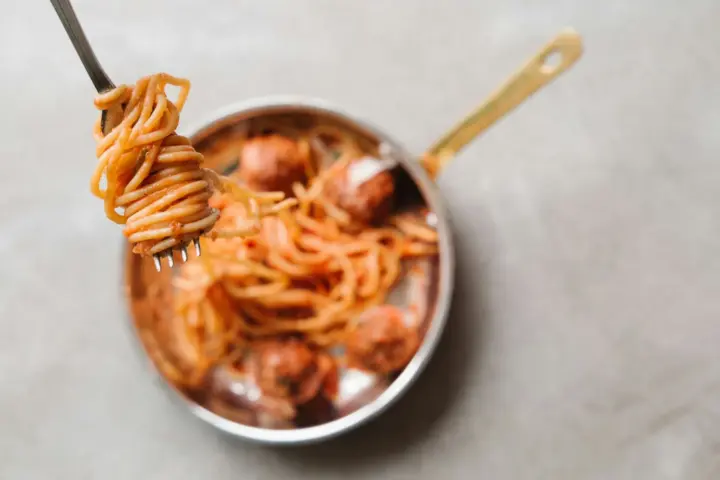
Finish the pasta in the pan rather than ladling sauce over a plain pile. Drain 1 pound (454 g) of spaghetti a minute short of al dente, saving 1 cup (240 ml) of the cooking water, then toss it over medium heat with 2½ to 3 cups (600 to 710 ml) of hot marinara for 1 to 2 minutes, adding splashes of pasta water until the sauce coats every strand.
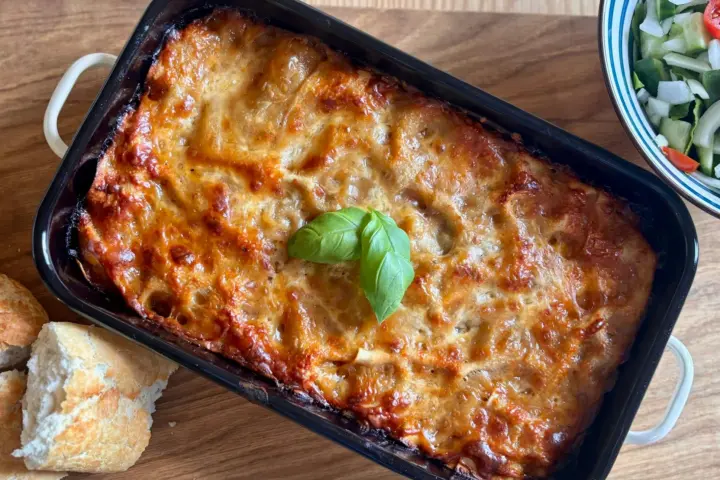
The same sauce runs through the red-sauce repertoire. It suits spaghetti and meatballs, it tops the cutlets and pools on the plate in chicken Parmesan, and it can bind the layers of a make-ahead baked ziti.
Note: Our baked ziti needs about 6 cups (1.4 liters) of sauce for a 9×13-inch (23×33 cm) dish, more than one batch makes. Cook a batch and a half, or double it and freeze the extra; split a big batch between two wide pans so it still reduces in about 20 minutes.
As a dipping sauce for garlic knots
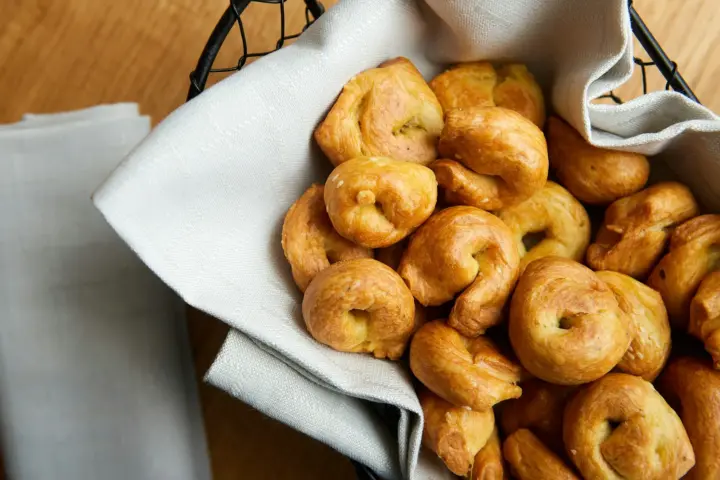
For dipping, serve it warm and a little smoother and thicker than you would for pasta, so it clings to bread. Blend a cup or two, simmer a few minutes longer if it runs, and serve it beside our garlic knots tossed in garlic butter.
As a cooked pizza sauce
Blend the marinara smooth, then simmer 5 to 10 minutes more, until a spoonful mounds on a plate instead of spreading; loose sauce soaks into a thin crust. Cool it completely, since warm sauce softens stretched dough. It’s more concentrated than raw sauce, so stay at the low end of the usual portions: about 4 ounces (115 g) on a 12-inch pie and 5½ ounces (155 g) on a 14-inch. Expect a rounder, less bright pie than raw sauce gives. Assembly and baking are in our classic New York cheese pizza recipe.
Common marinara mistakes
- A lid on the pan. The steam drips back in and the sauce stays thin. Simmer uncovered; a splatter screen catches the spits.
- All the salt up front. The water cooks off and the salt stays, so a sauce that tastes right at the start tastes salty at the end. Add half with the tomatoes and adjust once it has reduced.
- A reactive pan. Use stainless steel or enameled cast iron. Acidic tomatoes can pick up a metallic taste from bare aluminum or cast iron; Lidia Bastianich’s recipe, like many, specifies a nonreactive pan.
Variations
- Spicy: use ½ to 1 teaspoon red pepper flakes, bloomed in the oil with the garlic.
- Onion and butter: include the onion and finish with 2 tablespoons (28 g) of unsalted butter instead of the last spoonful of olive oil, for a softer, rounder sauce.
- Fresh tomatoes: in late summer, use about 4¾ pounds (2.2 kg) of ripe plum tomatoes, peeled and seeded. That scales Lidia Bastianich’s ratio of 3 pounds fresh for one 35-ounce can. Judge doneness by the spoon trail.
Storing, freezing and reheating
Refrigerate leftovers within 2 hours of cooking, or 1 hour above 90°F (32°C), the CDC’s limits. Shallow containers cool faster than one deep tub.
At 40°F (4°C) or below, marinara keeps 3 to 4 days, the window University of Illinois Extension gives for leftovers, so it’s an easy make-ahead: cook it a day early and stir in a few fresh basil leaves when you reheat.
Frozen at 0°F (−18°C), it is best used within 3 to 4 months, Illinois Extension’s guideline for frozen leftovers. Freeze it in 1-cup (240 ml) portions for dipping or pizza and 3-cup (710 ml) portions for pasta. In rigid containers, leave ½ inch (1.3 cm) of headspace in a wide-mouth pint and 1 inch (2.5 cm) in a wide-mouth quart, following the National Center for Home Food Preservation’s headspace chart, because the sauce expands as it freezes.
Thaw it overnight in the refrigerator, or warm it from frozen in a covered saucepan over low heat. Bring it to a simmer before serving: Illinois Extension’s reheating target for leftovers is 165°F (74°C), and simmering sauce is well past that.
Sources
- Sunday Gravy (Dan Freedman, April 17, 2014), The Saturday Evening Post
- Italian-American menu items you won't find in Italy (Sunday gravy entry), The Takeout
- Marinara Sauce (Salsa Marinara), Lidia's Italy (Lidia Bastianich)
- Why You Should Wait to Add Garlic, America's Test Kitchen
- The Best Whole Canned Tomatoes (taste test, September 2023), America's Test Kitchen
- Testing Olive Oil's Bitter End, America's Test Kitchen
- To Cook or Not to Cook Your Pizza Sauce? (Jeff Zeak), PMQ Pizza Magazine
- Leftovers, University of Illinois Extension
- Four Steps to Food Safety, Centers for Disease Control and Prevention
- Headspace to Allow (freezing), National Center for Home Food Preservation, University of Georgia
- Ingredient Weight Chart, King Arthur Baking